
A reversal in utility stocks triggered a new buy signal for the S&P 500

Key points:
- Utility stocks recently showed significantly more issues in uptrends when compared to SPX members
- The difference between S&P 500 and utility uptrends has now reversed, triggering a new buy signal
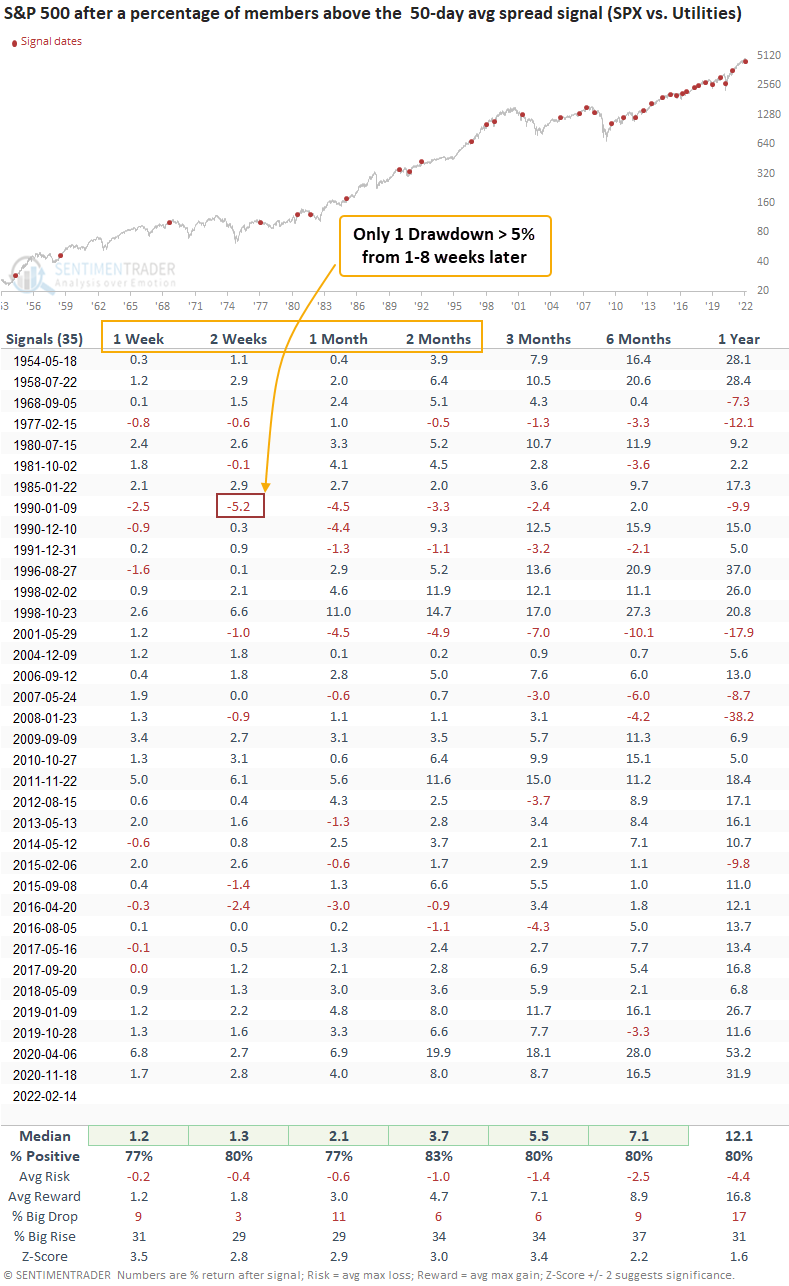
- Similar signals preceded positive returns 83% of the time 2 months later
Utility stocks as a risk-on barometer
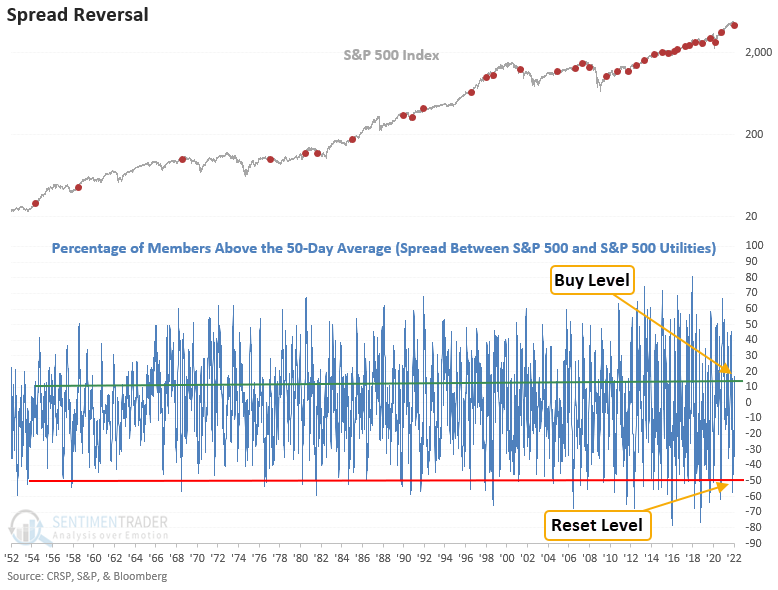
A trading model that measures the difference between medium-term uptrends for S&P 500 and S&P 500 utility sector members registered an alert on Monday at the close of trading.
The model identifies when the spread between members above the 50-day average reverses from -50% to greater than 11%. The reversal in medium-term uptrends suggests that the broad market is potentially transitioning from a more defensive environment to a more risk-seeking one. It might also indicate that interest-rate-sensitive stocks have succumbed to the pressure of higher rates.
The most recent reset in the spread occurred on 12/20/21. On that day, the S&P 500 showed only 38% of its members above the 50-day average, whereas utilities had more than 96%. So, the spread fell below the -50% reset threshold.
Similar signals have preceded gains 83% of the time
This signal triggered 35 other times over the past 68 years. After the others, S&P 500 future returns, win rates, and risk/reward profiles were excellent across all time frames, especially the 2-month window. Drawdowns were minimal in the first 2 months, with only 1 instance greater than 5%. However, I would be mindful that many signals occurred post the GFC low in 2009. Today's inflation and interest rate environment looks vastly different than most of that period.
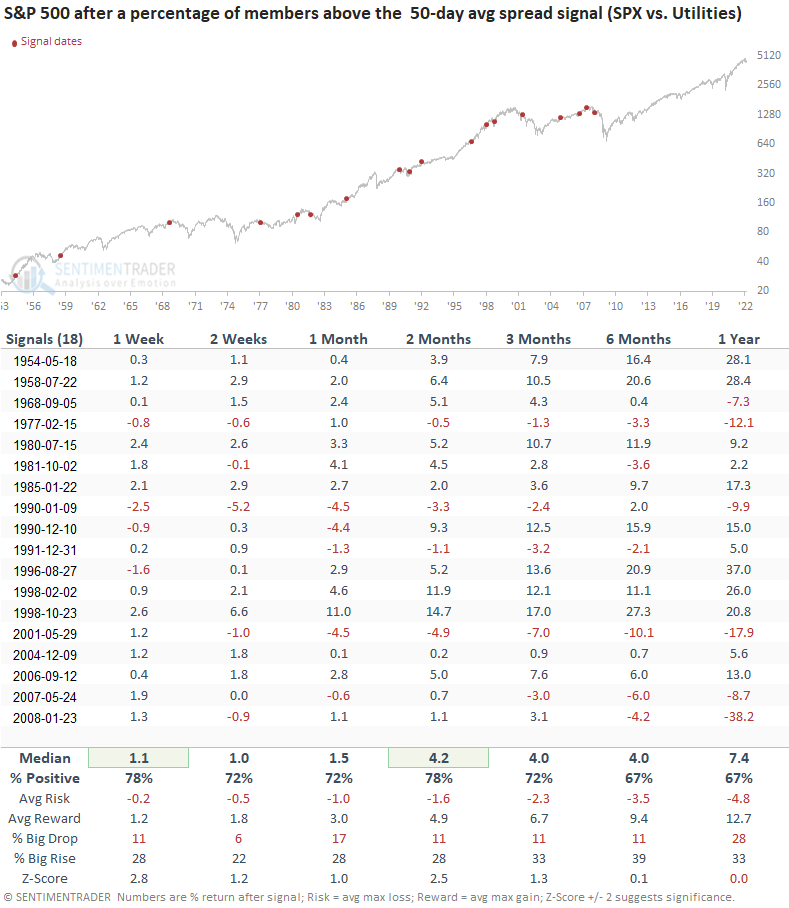
Signals before the GFC low in 2009
If we review signals that occurred before the GFC low in 2009, the returns, win rates, and risk/reward profiles still look solid.
What the research tells us...
The reversal in medium-term uptrends suggests that the broad market is potentially transitioning from a more defensive environment to a more risk-seeking one. Similar setups to what we're seeing now have preceded excellent returns, win rates, and risk/reward profiles, especially on a 2-month basis.
Even though we've seen an improvement in the market environment, several headwinds continue to linger. With the market stuck in a trading range, I'm employing a buy the dip, sell the rip mindset until we get a more explicit message from the market. Historically, breadth thrusts are among the best indicators to monitor for a signal that would suggest a change in character. So far, panic buying that triggers a thrust signal has been absent.